
Dried beef, dried buffalo meat, or dried pork are popular folk snacks enjoyed by men and women of all ages. If you’re worried about buying low-quality products, you can make them yourself. The process of drying pork isn’t complicated; in general, making dried meat is easy for anyone who enjoys this dish. Let’s explore the drying methods and appropriate drying parameters for dried meat in this article.
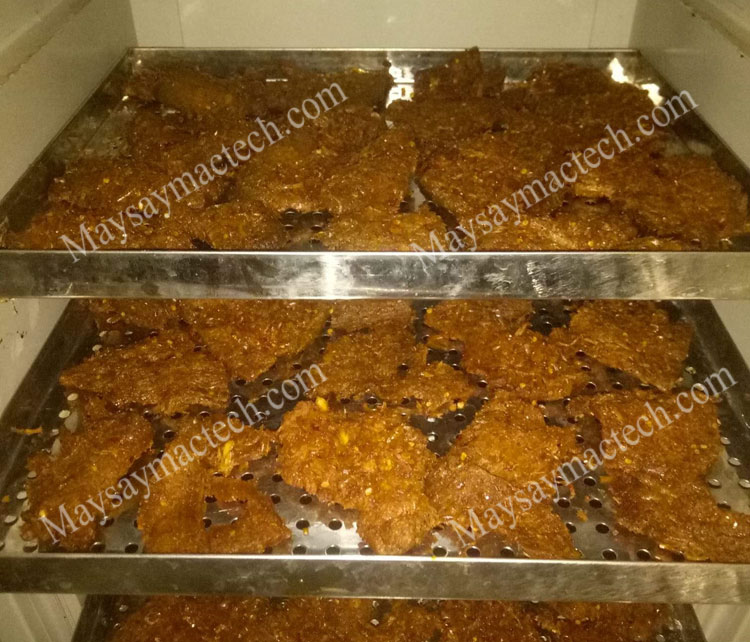
The best drying method for optimal quality is, of course, using a specialized meat dryer. The drying temperature should be between 50-70°C to ensure the meat dries quickly and retains its aroma. Before drying, the meat should be seasoned with all the necessary spices. No additional seasoning is needed during the drying process; simply drying to the required moisture level ensures product quality. Methods for drying pork include ovens, microwaves, sun drying, smoking, and turning. The most suitable method is using a multi-purpose dryer with a drying temperature range of 35-95°C, specifically designed for fast drying and maintaining quality.
Pork, beef, and other lean meats should be cooked thoroughly, seasoned well, and simmered for a sufficient amount of time to allow the meat to absorb the flavors. Afterward, place the meat on a drying tray, let it drain, and then put it in a dehydrator to dry it to the desired consistency. Note that meat should not be dried at excessively high temperatures, as this will make the meat tough and lose its flavor, reducing the spiciness and aroma of spices like mắc khén, dổi, lemongrass, and ginger. Drying at 50-70 degrees Celsius is ideal, with a remaining moisture content of around 30-40%. Avoid over-drying.
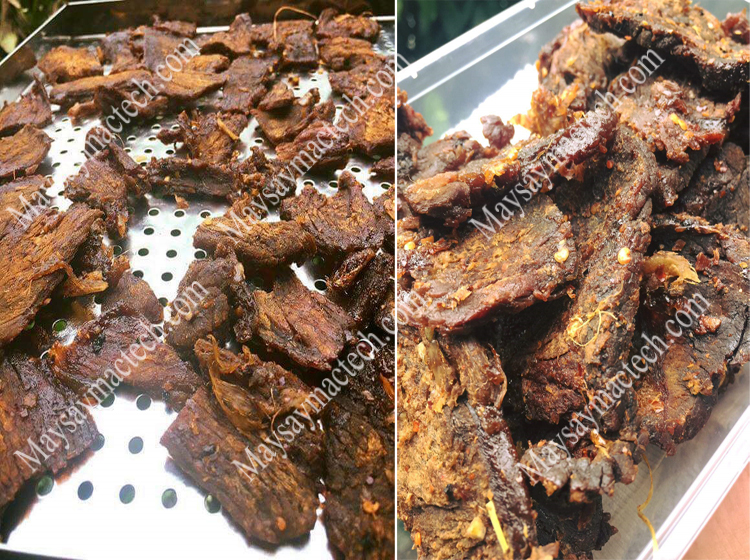
A hot air dryer with a circulating convection airflow control system ensures uniform temperature across all trays, preventing some areas from becoming over-dry while others remain wet. Furthermore, the use of a modern temperature control system ensures precise temperature control, and a timer for automatic shut-off provides peace of mind during use. The process for drying pork, beef, chicken, or fish is similar and straightforward. Once the product is dried to the required standard, it should be packaged in vacuum-sealed food bags for long-term preservation.
Thus, readers have gained a better understanding of how to dry pork and the appropriate drying temperature. Customers who need further information should contact Mactech for more detailed advice. Thank you for reading this shared content.
Most viewed content
 Nutritional cereal for Pregnant Mothers, Nguyen Quynh Nhu facility
 Eyelash dryer, drying temp 40-160, suitable for drying eyelashes
 Mactech 200°C high temperature controller, suitable for many applications.
 TS Nut cereal grain, large cereal facility, use MSD3000-160 dryer
 Mactech industrial dryer, high drying temperature of 100 to 300 degrees
 Temperature and humidity controller used for Mactech dryer
 Apple jam dryer, suitable for drying many kind of jam from fruit, vegetable
 Dried shrimp dryer, suitable for small and medium scale, fast drying
 High temperature dryer, circulating hot air drying machine, use industrial
 MSD3000-200 industrial dryer, high temperature 35 ~ 200 degree celsius